Continuous heart rhythm monitoring designed to detect irregular heartbeats that may not appear during a standard ECG. At Synergy Cardiology, we provide convenient ambulatory heart rhythm monitoring with a patient-friendly approach.

Expert cardiology care with a personal approach.
A Holter monitor is a portable ECG device used to record your heart’s electrical activity continuously over time. It helps detect rhythm disturbances that may not be captured during a short in-clinic ECG.
Depending on your symptoms and clinical needs, monitoring may be used to investigate intermittent palpitations, dizziness, fainting episodes, irregular heartbeat, or suspected arrhythmias. Continuous monitoring is especially valuable when symptoms come and go during normal day-to-day life. Continuous or ambulatory ECG monitoring is described in the uploaded materials as more effective for detecting rhythm issues than a brief spot ECG when symptoms are intermittent.
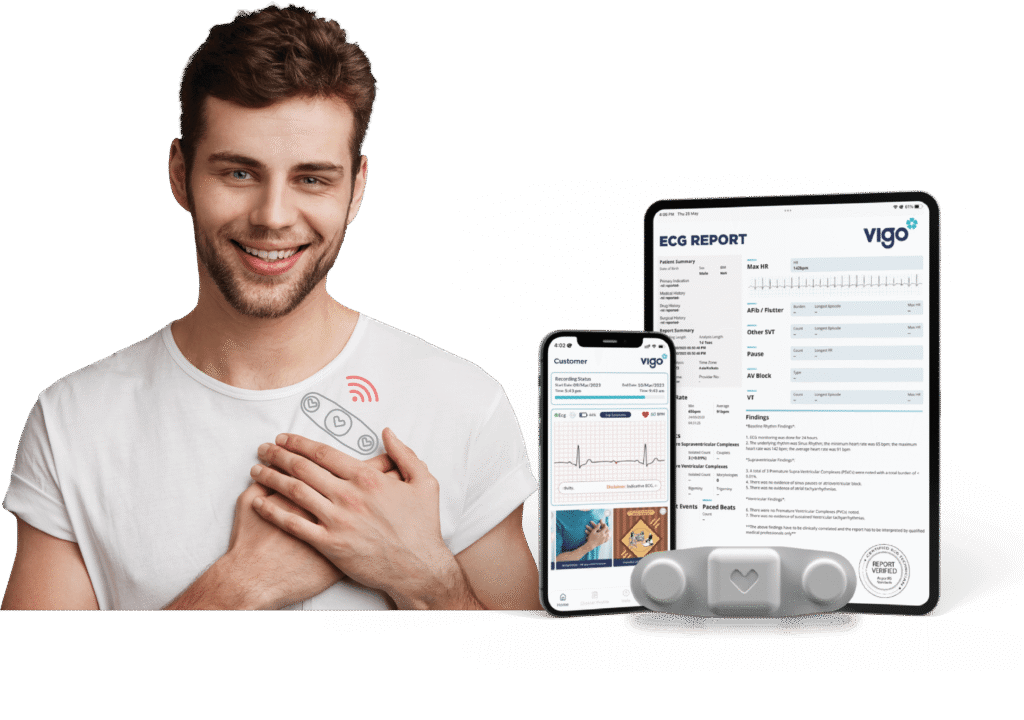
Synergy Cardiology also offers access to a newer wireless ECG patch-style monitoring option designed to make rhythm monitoring simpler and more comfortable for suitable patients.
This technology is designed to be:
Wireless and compact
Suitable for showering and light exercise
Comfortable to wear during usual daily activities
Quick to set up with app-based onboarding
Supported by AI-assisted analysis and expert review
This gives patients a more flexible way to complete monitoring while helping clinicians capture useful rhythm data in real-life settings. The brochures position it as a convenient alternative to conventional wired monitors.
During your appointment:
A small portable monitor is fitted to your body
Electrodes are placed on your chest to record heart rhythm
You will wear the monitor during your usual daily activities
You may be asked to keep a diary of symptoms and activities
Once the recording period is complete, the monitor is returned for analysis.
Your cardiologist will review the results and provide a report to your referring doctor.
You may be referred for a cardiology consultation if you experience:
Palpitations
Dizziness
Fainting or near-fainting episodes
Irregular heartbeat
Suspected arrhythmias
It may also be used to assess ongoing symptoms, investigate abnormal ECG results, or monitor known rhythm conditions.

Monitoring over a longer period can improve the chance of detecting rhythm changes that do not happen during a short clinic visit.
Potential benefits include:
Monitoring while you continue normal daily activities
Improved ability to correlate symptoms with ECG changes
More convenient, discreet wear for suitable patients
Rapid access to findings after completion
Watch a short overview of how heart rhythm monitoring works, what the patch/device looks like, and what patients can expect during the fitting and monitoring period.
Learn more about heart rhythm monitoring, how the device works, and what to expect.
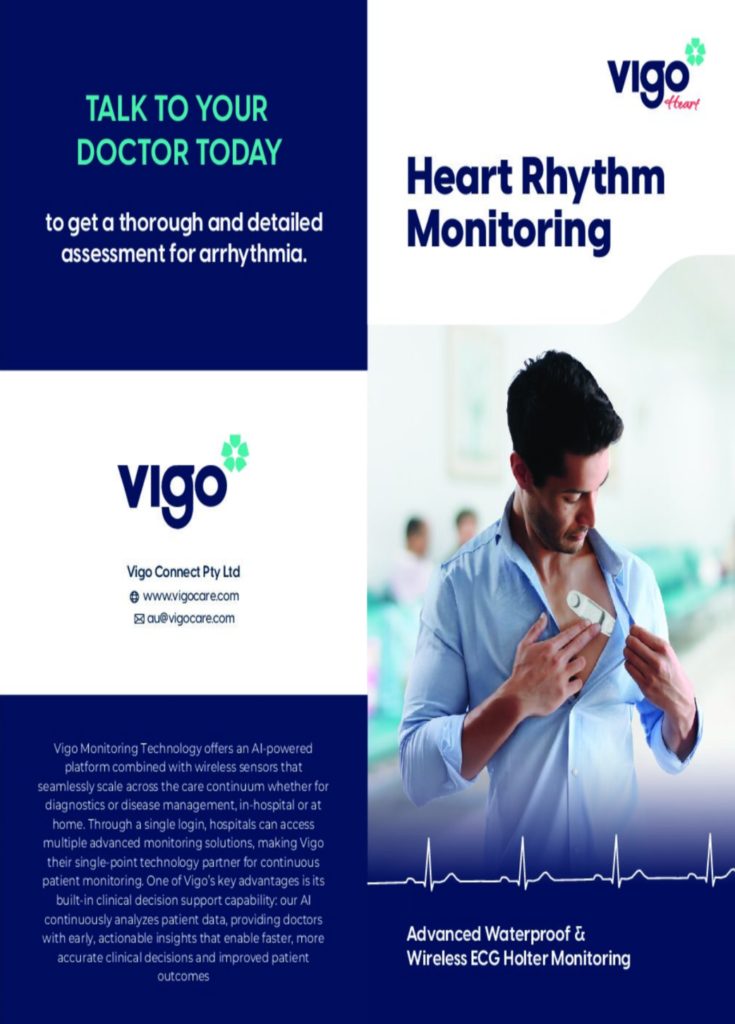
A simple overview of heart rhythm monitoring, common symptoms, and how extended ECG monitoring can help detect irregular heartbeats.
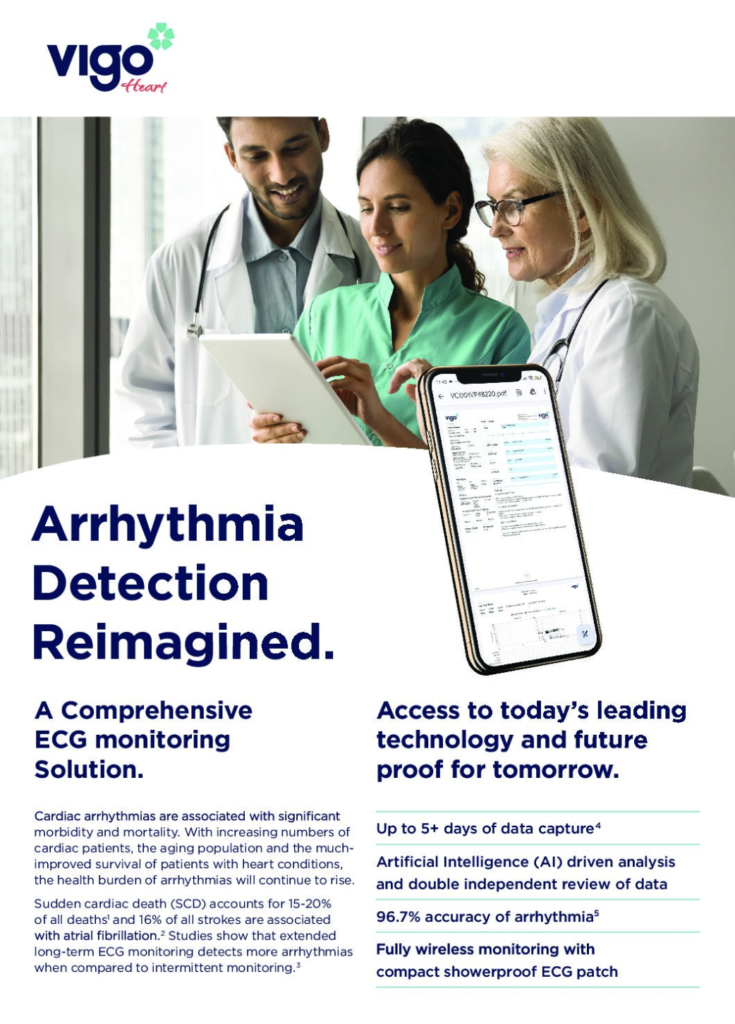
A quick introduction to the Vigo monitoring service, including key benefits, patient comfort features, and how the technology works.
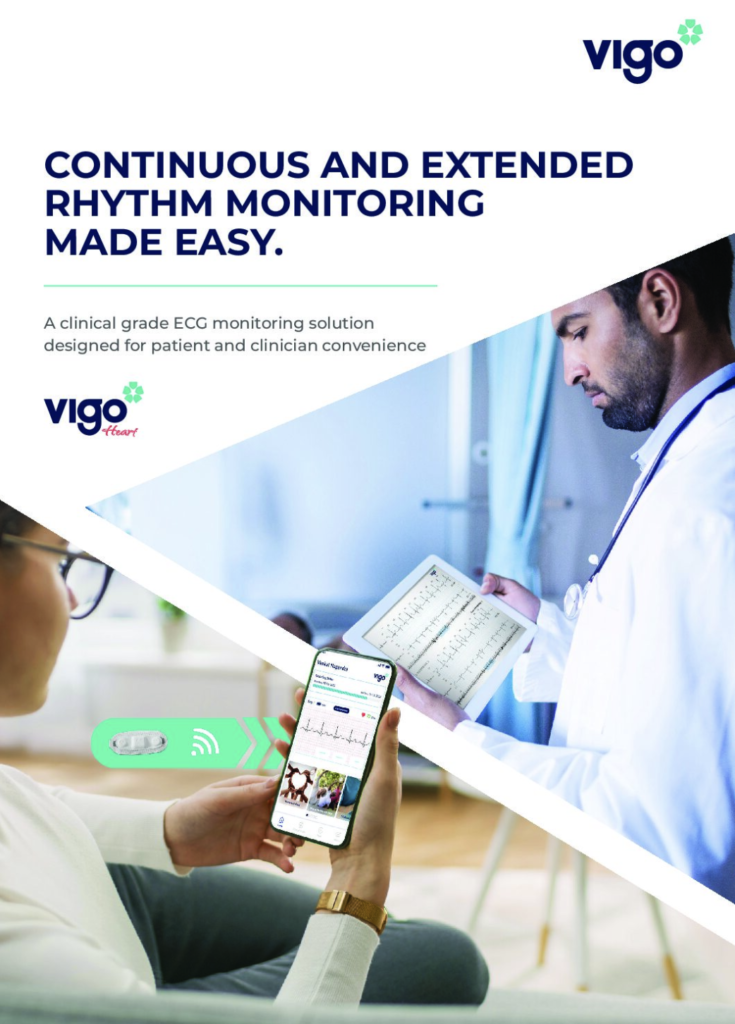
A more detailed resource explaining the clinical features, reporting process, and advantages of extended wireless ECG monitoring.
Please bring:
This helps ensure your cardiologist has all the information needed to provide accurate assessment and advice.